A burst geyser can flood a ceiling within minutes. Acting quickly limits the damage and makes an insurance claim easier.
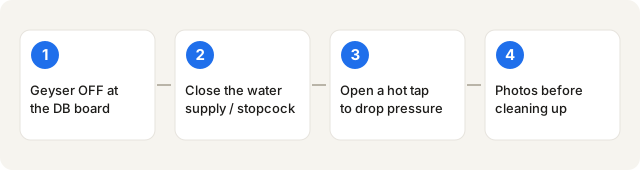
In the first ten minutes
- Switch off the geyser at the distribution board. It usually has its own labelled breaker.
- Close the cold-water supply to the geyser, or the main stopcock near your water meter if you can't find it.
- Open a hot tap somewhere in the house to release pressure.
- Catch the water with buckets and towels, and move valuables and electrical items away from the leak.
- Take photos of the damage before anything is cleaned up.
Don't switch the geyser back on until a plumber has checked it. A geyser that runs without water can damage the element.
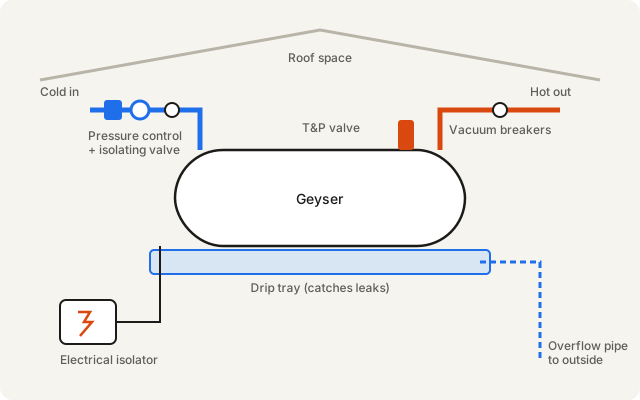
What the plumber checks
- whether the geyser itself has burst, or a valve, pipe or drip tray is leaking
- the pressure control valve, the temperature and pressure valve, and the vacuum breakers
- whether the installation meets the national standard, SANS 10254, including the drip tray and overflow
If the geyser is replaced, ask for a plumbing Certificate of Compliance for the installation. Insurers often ask for it.
Insurance claims
Most household policies cover a burst geyser and the resulting water damage, subject to your excess. Exact cover depends on your policy. Insurers commonly ask for:
- the claim reported as soon as possible
- photos of the damage
- the plumber's report or quote
- a compliance certificate for the new installation
Many insurers have their own approved plumbers. Call your insurer first and ask whether you may use your own plumber before work starts.
This guide is general information. Check your own policy for what's covered.